Fiordland: A hidden world of wonder
Fiordland National Park is New Zealand’s largest national park, covering over one million hectares of indescribable bush, mountain and glacial environments. While many famous sights are easily accessible by cruise or coach tour, there are parts of Fiordland which require a little more work to get to but worth the time and effort.
Fiordland offers over 500 kilometres (311 miles) of walking tracks through the national park. There are also more than 60 backcountry huts and ample opportunity to explore a primeval world of mountain peaks, alpine lakes, moss-carpeted valleys and Jurassic forests.
You can make your exploration into deep Fiordland as easy or difficult as you like. Multi-day small boat cruises into the southern fiords have become more popular in recent years as people discover not only the beauty of these places but the rich Māori and European history that makes them so special.
At the other end of the spectrum are those who visit Fiordland to test themselves against Mother Nature. The Dusky Track and George Sound Track are the most rugged hikes you can take in Fiordland. Alternatively the remote Hollyford Track offers both independent and guided hiking. Before you head out on a big adventure in Fiordland, ensure you’ve done your research.
Dusky Track
The Dusky Track offers trampers a challenging 84-kilometre (52 mile) hike which takes around eight days to complete. The track links Lake Hauroko with Lake Manapouri and can include a two-day detour to Supper Cove in Tamatea / Dusky Sound. An experience that is sure to become a lifelong memory, the track traverses three major valley systems and crosses two mountain ranges. Not surprisingly, the Dusky Track is recommended for experienced hikers, and the experience covers wire bridges, tree falls, deep mud, tree roots and river crossings. It is recommended that you hike with a companion and carry emergency equipment including a personal locator beacon.

Dusky Track challenge of a lifetime © Graham Dainty
The Hollyford Track
The Hollyford Track is the only major track in Fiordland at low altitude, making it walkable in any season and rarely cut off by snow. Like all tracks in Fiordland, the Hollyford Track is prone to damage from heavy rainfall, and hikers should always check weather conditions before setting off. Emergency equipment, including a personal locator beacon, should be carried.
The Hollyford Track is a moderate tramping track, beginning at the Hollyford Road (off the Milford Road) and finishing at Martins Bay. The tramp begins in the Darran Mountains and follows the impressive Hollyford River to Martins Bay, making it the ultimate mountains-to-sea experience. Hikers are rewarded with the chance of seeing kekeno, the New Zealand Fur Seals, and tawaki, the rare Fiordland Crested Penguins, at Martins Bay at certain times of the year.
The Track can be undertaken as an independent walker or as part of a guided walk party. Guided walkers stay in different huts and enjoy a value-added experience through accommodation and hosting.

Kekeno fur seal © Graham Dainty
Expeditions to the Southern Fiords
For those looking to explore Fiordland’s lesser-known fiords, several expedition-style cruises offer an incredible way to access areas of exceptional remoteness and beauty, rich in both Māori and early New Zealand European history. Multi-day sailing adventures cover locations such as Tamatea / Dusky Sound, Te Puaitaha / Breaksea Sound, Rakituma / Preservation Inlet, Taiari / Chalky Inlet, and the old whaling station on Stewart Island. Inaccessible by any means other than boat or helicopter, experiences such as these offer a glimpse of a landscape very few get to lay eyes on.

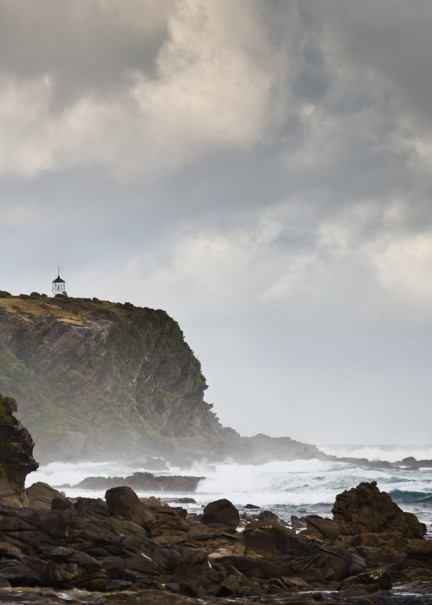
Puysegur Point © Graham Dainty